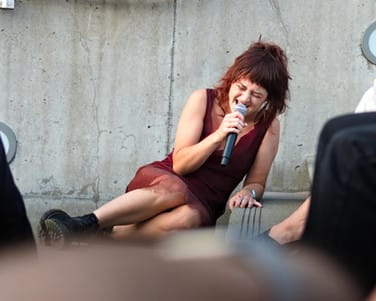
"We've become like intertwined vines": Mt. Fog’s Carolyn B. on late-blooming saints and growing together as a band
As you would expect from a Hildegard of Bingen superfan, Mt. Fog lead singer and keyboardist Carolyn B. starts our conversation off with a quote from her:
Do not lay on more strain than the body can endure, and moderate straining and abstinence bring nothing useful to the soul.
Given her frenetic 2026 — Releasing a new, well-received Mt. Fog album, playing shows around the Northwest with a fall tour of the Northeast planned, and organizing a one-night festival celebrating Hildegard — you might be concerned she’s not taking the advice of the 12th century mystic, abbess, visionary, saint, and polymath.
But Carolyn is full of eccentric, headstrong energy. Hildegard wrote of viriditas, a verdant, divine life-force that runs through all living things and gives us spiritual and mental health. It makes things grow and change and thrive. The idea of viriditas is central to Carolyn’s life, something she’s been striving toward in her music since she first encountered Hildegard’s music as an isolated teenager.
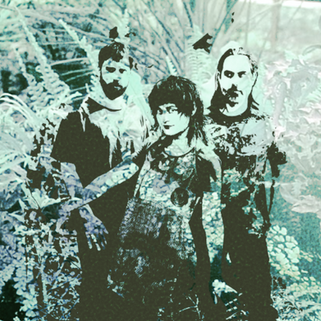
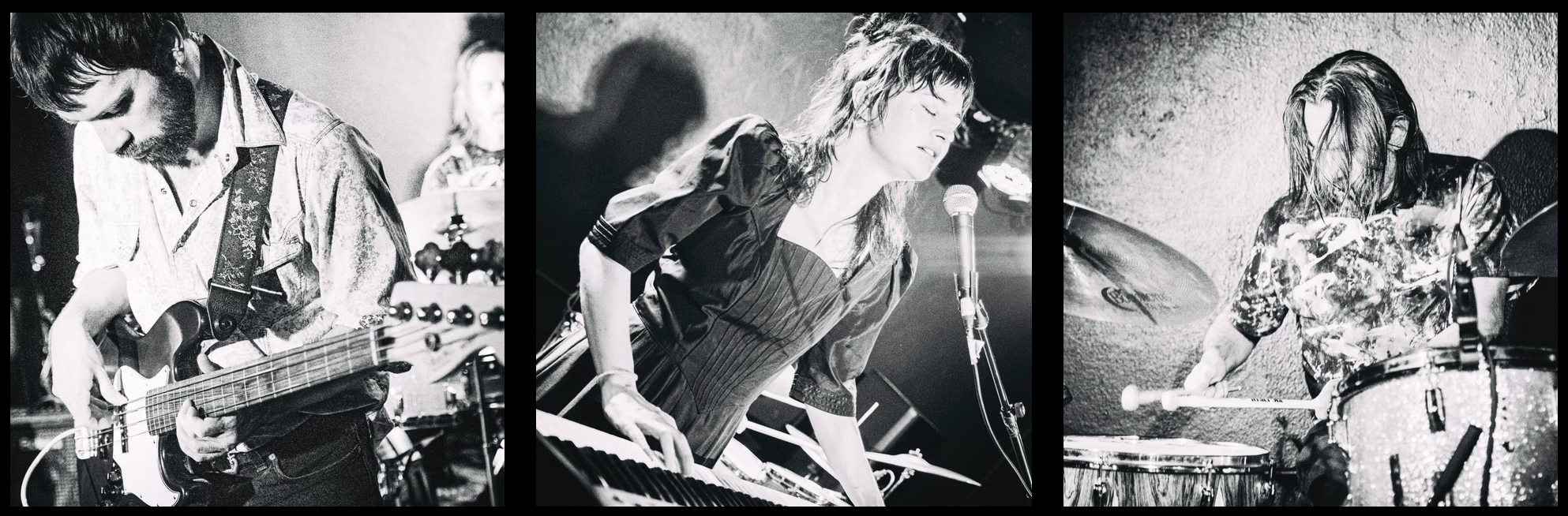
What started as a one woman band armed with a keyboard and a drum machine has grown to a trio. She calls the relationship mutualistic, where they make music together, working off each other in ways she couldn’t do as a solo artist on her earlier albums. Like Hildegard, she thrives in interconnected community.
We talked about the band, the sold-out Hildegard Fest on Sept 16th, and a woman Carolyn describes, half joking, as the patron saint of late bloomers.
DEEDUB: Talk to me about Hildegard. What drew you to her?
CAROLYN B.: I'll show you some of the books I have about Hildegard. (Holds up stack of five books) Here's part of my Hildegard library. Just a few. It's the top selection.
I went to a very strange and special performing arts high school that's also a college and graduate school. They had a listening library: on the top floor was a music library where you could go to booths and listen to records, cassettes, and CDs. When I was in 11th grade, I want to say, I didn't have that many friends. I went to the listening library, and somewhat randomly, I don't know how this came about, but I listened to Hildegard.
I believe I listened to a record, which makes me think it might have been the Gothic Voices record that apparently set off the Hildegard phase. I think that came out in the 1970s, early 80s. And I was just really in love, and I didn't learn that much about her at the time.
Through the years, she sort of popped up in my life. I would say seven years ago, I acquired more Hildegard recordings and started to dig back into them, particularly (the band) Anonymous 4, Origin of Fire, great CD, recommend. Then about two years ago, again, not sure why, but a new Hildegard craze set off in my mind, where I decided to learn more about her and everything else she did, because I only knew about her music.
But in fact, in her time, she was much loved for being a healer. That's what people knew her as. She was an herbalist. She was a woman of medicine in her own way.
She also wrote visions that I've gotten really interested in, in terms of what they represent about her ideas on the feminine divine. The thing that's really gotten me in the last couple of years is her letters. She was a medieval woman who wrote letters to popes, kings, queens, ladies of importance, ladies of not importance.
I could go on. I will stop there. I really could talk about Hildegard all day, so you're going to have to rein it in. But that's how I got into it.
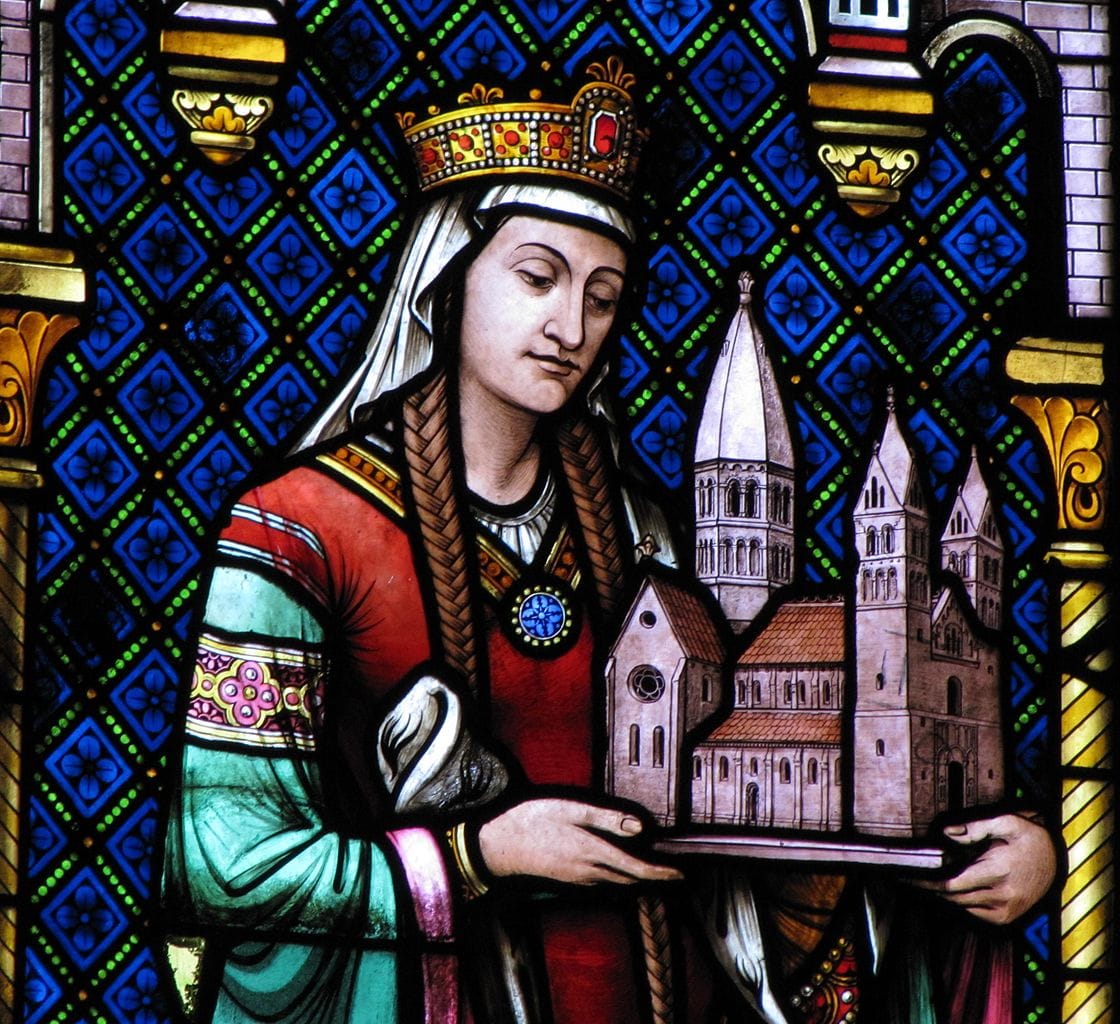
DW: So what experiences from her life resonate with you?
CB: From her life? Something she said frequently was that she called herself a "poor little female," "a fragile creature." She said she “didn't know anything.”
She was very self-taught. There's this phrase she wrote in one of her letters: she said, "even I, who suffer from a heart of little courage, am again and again disturbed and crippled by fear." I think she was always searching in every way she could, every avenue available to her, even ones that really weren't available to women at the time.
She forged her path to find, to search, to listen. She considered herself a vessel through which this radiant light and information was being processed, but she didn't elevate herself, ever. And I think like just someone who was always searching, always trying to explore all the different ways the world is magical.
I think that's really cool. That's what resonates with me the most, because no matter what she was doing, it was never with a sort of smug self-assurance. It was always with the sense of, I'm a fragile creature.
I don't know anything. I don't understand anything I see. I don't have all the answers at all. I find her voice, the voice in which she wrote her letters, to be incredibly fascinating, and I'm really intrigued by that.
It just resonates with me. I'm really intrigued by what it must have been like to be around this person. She has some quirks I can tell you about, but that's probably the biggest thing, the poor little creature, fragile creature thing. I really resonate with that.
DW: Although it reads like she's sandbagging in a way.
CB: What do you mean?
DW: "Oh, I'm just a poor little creature." Like, uh-huh, uh-huh. You've written all these books. The Pope knows who you are. You are clearly this incredible poet. It has that "I'm just a simple country lawyer" sound to it.
CB: Well, I think it's also that she was in fact quite powerful. At a certain level, she knew that as a woman, women were sort of deemed as lesser. So I think that's the context in which she had to keep her profile within the confines of something acceptable, because this was in an era right before witch trials started.
Witch trials hadn't started really yet, I don't think at all. The first witch trial was maybe a century or so later, but she existed in this particular time politically.
It's really fascinating. The political aspect of her life is really interesting, but I truly believe she was humble in her own way and did suffer from maladies. So she was quite fragile in a physical sense.
DW: And that really drove a lot of her work. Especially given the time, there obviously weren't a lot of opportunities for women. And to have that opportunity to essentially be an abbotess, to have that sort of voice, was a lot.
CB: And she stood up to the Church many times, to the point that in her later years, her convent was put on watch by the Church. I don't remember the term for it. They weren't allowed to do certain rites and rituals because of this thing involving someone she had buried in the graveyard. And she stood by her choice.
And then in another circumstance, she was like, I have to move my ladies to the wilds and I'm taking all the relics and I'm taking all the gold and we're doing it. And the Church was basically like, no, you can't do that because you've made this monastery very wealthy with your fame. So we can't have you leaving with all the stuff. And she stayed in bed for a month until she got her way.
She stood up to the Holy Roman Emperor. She was badass. But I do think she was fragile.
And it's really fascinating, the political and social context of it.
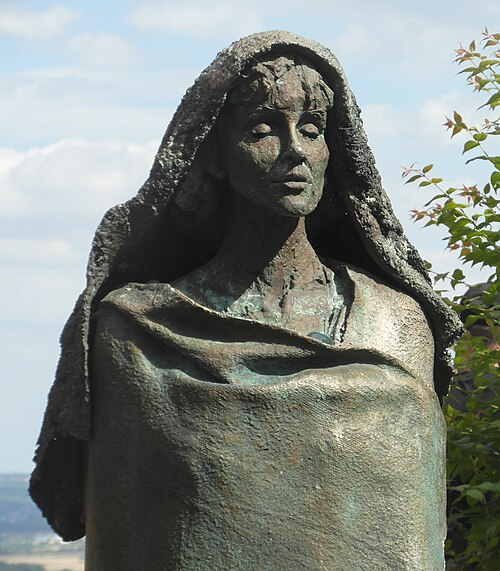
DW: One thing I find interesting about her life is she really didn't start the bulk of her writing until after her vision at 42, where she thought God was telling her to start writing. You're over 21. And I'm wondering, because I'm older too, this is a society that really lionizes the youth and starts to villainize people who are older. What things from that do you pull out of that part of her story for yourself?
CB: I have a friend, Nico, who painted our album art for Every Stone is Green, which is very influenced by Hildegard. She came up with this phrase, or maybe she heard it, but I think she might have come up with it, that Hildegard's a patron saint of late bloomers.
Which I love. I think that with so many things, we think, oh, we're over 30, I can't start anything new. I can't make new friends. I can't start a band. I can't get a radically new haircut.
I think that is changing in a lot of ways. I think that even the idea that we have something more useful to say the older we get, that seems so obvious to me. And I'm someone who's changed careers many times.
I didn't start a band. This Mt. Fog is my first band, and I'm late into my thirties. People think I'm younger than I am. No, I started Mt. Fog in my thirties. I also didn't learn how to drive until I was over 30. I feel like you do your work when you do your work, and it happens when it happens.
I think, if you keep an open heart to the messages you receive from the universe, you might be creating your best album when you're in your seventies. Didn't Paul Simon just release a new album? I saw Marcos Valle last night. He's 82.
DW: I can remember an Ethiopian musician who released an album last year who was 90. [Ed.: He is 82.]
CB: I can't remember. That's awesome.
Obviously the situation's just so like fascistic, capitalistic, misogynistic, all those things. We're not fascinated by youth because of good reasons. I feel like it's for reasons that are kind of slimy. It's also a message that when you're over 30, or especially over 40, and especially as a woman, you're invisible and not allowed to be cool or interesting.
I think that's so boring. I don't relate to it at all. A lot of my favorite artists keep making cool, different stuff, like Blonde Redhead. They've been making new albums since the early nineties. Björk, Kim Gordon just released a really cool record. I think we're in this really cool moment right now, where a lot of amazing artists, like Flea, just did a totally radically different type of new record.
I don't feel like music heads care that you're 40. Nobody cares. I'm not surrounded by people like that. It just seems so immature.
DW: I was reading something recently saying that the difference between when the Boomers retired or reached that age, and what Gen X and Millennials are doing as they get older, is the Boomers turned around and did the things they bought: the house, the car, all the expensive things. Whereas Millennials, old Millennials, Gen Xers, are doing more of the things they did when they were younger, but now they have the time and the ability. So they're going back to start playing in bands. They're going back to doing art.
And I think that's heartening for me to hear. What that says is that things don't expire at 40, that it's not about being done. It's about finding your next phase.
CB: And being open again, curious about whatever different art you might be receiving from the universe, and not just retreading the ground you tread when you were 20, because you're older now, more interesting. I'm really excited when artists make new types of music or art as they get older, and they don't just barf up different versions of what they did when they were 25. It just doesn't really work as well. I think we do that.
Hildegard did a trilogy of visions that she began, like you said, in her 40s. She had visions her whole life, but she started really writing them down in earnest. I think it was her 50s, 60s, and 70s when she did those three sets of visions. And all of her music and all of her letters, she didn't start writing letters until she was around 45 or so.
We could go on about that.
DW: So what drew you to creating this Hildegard festival?
CB: It is a tiny music festival, or a curated evening. I call it a festival because I want people to feel like it's festive. I literally had insomnia, I guess a year and a half ago, last February. I have pretty bad insomnia.
I don't sleep very much. I was up all night, and I just really felt like I'm always telling people about Hildegard, and I really feel like there should be experimental music and early music. It should come together in one evening, all inspired by Hildegard, channeling the feminine divine.
And wow, that'd be so cool. Why does this not exist? So I talked to some people. I talked to Lori Goldston at a show. Lori was like, you should do it. "It's imminently grantable" is the word she used. I didn't end up getting a grant. I tried to get a grant to do it because I wanted to pay the artists all as much as I would want to get paid to do a show like this.
And I was like, can I do it financially? That's why I said Vermillion, because they don't charge a room fee for artists during the week. So that's a huge reason I did that. Also, Vermillion's awesome. But that enabled it. It's in its second iteration this year. Last year [Hildegard 25] was really, really fun, really cool. So many awesome Hildegard fans came out.
And it was more early music oriented [last year]. This year it's a lot less early. It's more experimental, avant pop. It's going to be a little bit more raucous this year. There's two bands performing. I wanted it to be more like a green exclamation point, like a plant, with the photos and the long-lapse video. I wanted it to have that energy this year.
And when you realize you can do cool things, and if you put a little bit of effort into it, this can happen. I realized there were so many people who were really stoked on it, and I was like, oh wow, this is really fun.
DW: It's interesting because you talk about green and those long lapse videos. There's a lot there, I think, about growth. And I'm wondering, you have a group now that's a trio. You started off as a woman of a keyboard and a drum machine. And now this second album as a trio. How has that growth gone for you during this period?
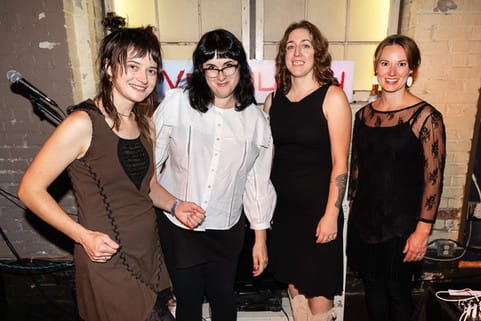
CB: It's definitely an exact mirror of my own personal life. Things have intertwined in that way. It's been a collaboration that's gone from musicians I respect, in one case from quite a distance; in another case, my friend Casey, I knew him a bit better. And now we're best friends, and Andy's my fiancé.
We've become like intertwined vines, and I think I'm so influenced by both of them. It's a mutualistic situation. You know about lichen, right?
DW: Two things that are... symbiotic.
CB: Symbiotic, yes. One of them makes the house, one of them makes the fuel. It's a completely intertwined super organism.
I feel that way about the band. It's both really special and really scary sometimes, because I think whenever you do something with so much heart, you're putting so much out there that it's like open heart surgery all the time. (Not literally.)
But I think that's part of growing, it's a vulnerable process to grow. And that's what I've been going through in my own personal life.
And that's what's been happening with the music. It's been really, really cool and special. And it means everything to me. I'm getting emotional....
That's what the concept of viriditas that Hildegard wrote about is: this green spark of creativity within everything. And I think trying to embody that with the music on this last album, it felt like an evolution of myself as an artist. But in the lichen sense, I can't do this without these other people. It's been really cool.
It's like finding your ecosystem, where you can thrive. And I'm really glad for the band, because I think I was getting to the end of my interest with doing Mt. Fog solo.
And it's interesting, because I feel like right now, even with indie rock, quote unquote, it's really being funneled into the solo artist realm. I feel like bands are out of style right now, in my opinion.
A lot of the up-and-coming artists, the most-listened-to artists, whatever that means, they're like solo acts. Or if there is a band, the only person you ever see is the front person. And usually that's a woman. I find it strange and isolating that that's the case. No shade on anyone who does anything solo!
But it's interesting to be getting more into the trio when, at the same time, I feel like what's consumable, what's profitable, what's marketable, is seemingly what I was doing before, which is like, hi, I'm a femme lady solo on a stage with a microphone.
DW: One of the things you see discussed lately is the high cost of doing music. It's part of what's driven us to this solo artist bedroom pop thing that's going on. And I think it's tough now. I would imagine this is not something that actually sustains your rent and your monthly budget.
CB: We've sold more than 10 cassettes. Come on.
DW: You sold an entire 100 LPs of this last album. That's at least cat food.
CB: No, you haven't met my cat. She's not in here right now. She's expensive.
DW: It used to be that music was very much about people wanting to have a living wage to share their stories, to share their art and their songs. And now it very much has turned into a hobby almost for people who have the time, energy, and especially the money. How does that affect you? How do you deal with that?
CB: I think that we're all internalizing, all the time, the logic of capitalism and the logic of the society that's coming at us. I feel trapped by it sometimes. I feel like it makes me feel like my eyeballs are being irradiated with Wi-Fi signal, or whatever.
So I think that is something that happens where people apply austerity to themselves. They're like, well, I can't do this. They're like, well, I can't do this. I can't do that. While simultaneously being like, well, I should probably buy ads from Instagram.
I think that collectively we've internalized a lot of the illogical logic of the systems that we're swimming in. And so if you are in a band and you're recording, you might actually find that because of the relationships you've formed, people are going to help you out. You're going to actually get more resources because, oh, Sarah knows how to record. Bobby has the recording equipment. Sarah plus Bobby equals "let's record an album." You don't have to spend thousands and thousands of dollars in a fancy recording studio to get great recordings.
I think this is an era where it's cheaper than ever to make a great album with almost free equipment. So I think that there's an element of being in a band, being in a community where you find resources for a lot cheaper than you would if you were to deem everything an opportunity to engage professionals.
And I'm not going to try and be like, oh, being a professional audio technician, that has a value. Of course it does. But I think that I've definitely found now that we're a trio and I'm working with Casey and Andy, those guys know a million people. When we need something, we ask our friends.
For instance, we're doing a tour in the Northeast in October. We're asking friends to help us out. And another artist, Jesse Tiny Vipers, was like, hey, if you're going on tour, just ask everybody to help you book it, ask people to put you up in their homes, ask people to engage with you as a person and as a community, and you shall receive. I think that's true.
Don't apply austerity to your art. Use your art as an opportunity to connect. And when you do that, you'll end up spending less money. It doesn't have to cost a lot of money to create music and art. It does take a lot of time, and it does take a lot of energy. And if you're not willing to put in time and energy, you might have to spend more money.
"Don't apply austerity to your art. Use your art as an opportunity to connect." — Carolyn
I mix all of our records. I produce all of our records. We record a lot of it at home too. For this last record, we were only in the studio for two days, and it was our friend, and he gave us a really great rate. You can do a record, you can make great art without spending $10,000. But I think when we're all being siloed, and we're all being told the only way to do music is to engage with corporate platforms. The only way to do it is to engage with people who are going to sell you their services for top dollar. It is going to be really expensive. But I think both things are true at the same time.
I think everything's gotten more expensive, but at the same time, we need to use our muscles to connect with people. It doesn't have to be crazy to do that.
Also, last thought on the solo versus band thing, and touring, and everything. I wouldn't want to go on tour by myself. That doesn't sound fun. No, thanks.
DW: Especially as a woman where everyone's gonna go, "so your boyfriend's playing tonight."
CB: Or people not respecting your boundaries, I think is the one. So having your friends with you, who is your band, just makes it more fun. It makes it more safe. It might cost slightly more to be in a car and get an Airbnb. But do you have to get a hotel every night you go on tour? No.
DW: There's a lot to this. I could probably spend half an hour just on this topic with you, about how community is becoming important again, I think, as a society; and how music has always been about community. And I feel, especially post-pandemic, we felt so separated from that. And I think you've said before, it's sort of in your bedroom, you're by yourself, without the people around you who can talk to you about how to do things and how to move things on.
CB: I think Hollow Earth Radio… there's been various iterations of me trying to get involved with it, because I think it's a really cool organization. I think Space 101 is really cool, too. There's a lot of great, like you said, this is what music is about. It's about connection.
DW: What's making you happy right now?
CB: I have a really, really cute dog. So I have two really cute dogs.
That's making me happy. I think, having projects to do that feel like no one else is gonna do this, and I'm excited about it.
Like Hildegard Fest, I'm really stoked on it. I'm putting together the zine for Hildegard Fest right now. And I have an idea, I think Sylvia Plath and Hildegard got some similarities. So I'm trying to do that.
I have minor pangs of existential crisis where I'm like, I'm not writing any new songs. Every time I do a little bit of new songwriting, I feel better. So that makes me happy.
This show we went to last night, everyone in the audience was so excited at the end. It was the most positive music show I've ever been to. Marcos Valle. He's Brazilian. He's 82. He's been making music for over 60 years. And the show was so much fun. Oh my god, his band was awesome. That was a great reminder that music is actually really fun. So I'm excited. We're doing a show next Friday in Bremerton.
I like performing. I look forward to performing.
DW: So is there any one piece of media you shove it into your friend's hands and say “you have to watch, you have to see this right now, you have to listen to this?”
CB: I got a book. I got it right here. Hang on one moment.
DW: Okay.
CB: I always mangle the title. And I don't want to do that.
Yes. Okay, here we go. Drive Your Plow Over the Bones of the Dead.
DW: I love that name.
CB: By Olga Tokarjuk. Very cool book. One of my favorite books I've read in a while. And I found it very exciting because I found her voice, not to always bring it back to Hildegard, but it was weirdly Hildegardian. I found it to be teeming with optimism about the magic of the world, without being twee and without being self-serious. And I think that is how I aim to be.
And I was like, this is really cool writing. So I really recommend that book. It won a lot of praise. It's a recent book. The author is Polish. So that was really cool.
I'm new to Sylvia Plath, but her poetry is incredible.
And then, in terms of music, gosh, I'm always telling people about Dave Holland. Do you know Dave Holland, the bassist?
DW: The bassist, yeah.
CB: I got to meet him like a year ago at Jazz Alley. And he signed my record and then I immediately started crying. I was like, I love you! You're so amazing!
Also, Andy's band from 1998 to 2008, FCS North. Are you aware of FCS North?
DW: I think I am.
CB: FCS North. You got to listen to FCS North.
It's kind of like live breakbeat drums, but with atmospheric synths and really cool production. Very unique. They have an album called Vocabulary that's really amazing. Phil Ek was one of the producers. Recorded it. They were very much of a moment, groundbreaking. FCS North. I'm always telling people about that. They also had an album called Say Go. That's a little more electronic sounding. So check out that. Do you know the band Satisfact? Two of the members of Satisfact were in FCS North.
And yeah, Hildegard Fest is sold out. I wanted to do it at a larger venue this year so that there would be more capacity, but it just wasn't in the cards.
DW: And it's, we've just lost so many spaces.
CB: Yeah.
DW: And it's like, we just lose room after room after room. It's just so hard. I mean, part of the whole point of Vera Project is giving all ages shows a place to be, which is good. But at the same time, all I ever hear about anybody doing [DIY] things are living room shows and in little “free spaces” like Vermillion. And that “free space” to play needs to exist again. I'm kind of hopeful with everything completely going sideways with late stage capitalism, maybe this means that people will start opening their homes up again or actually start going “I'm going to buy a bar and just have people play there.”
CB: Yeah, I don't know. I mean, it's interesting because we're doing this tour in the Northeast, a very short tour in early October. And we're not playing one "normal" venue. All the places we're playing, they're all really cool, like in New York, Philadelphia, Hudson Valley, wherever. It's all DIY spots people are cobbling together. That's where the energy is. I'm not like complaining. I'm saying I'm excited about it.
But that's what's happening there. That's probably what's going to happen here too. It's like the cool spots are DIY, underground.
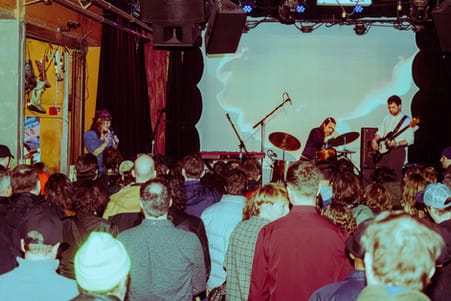
Earlier this summer we organized this show at this really cool vintage shop downtown. That was one of my favorite shows I've ever done. I had such a good time. Ghost Vintage, really cool shop. And the person who runs it is also a musician. So that's part of why it's cool.
And that's why he does these shows sometimes. When we were moving the clothes out of the way to set up the stage, I felt like we were in a 1990s Seattle sitcom. It was so wholesome.
It was so much fun. It was packed. It was great. And I'm like, I love this. This is great. And we actually made some money because people showed up and paid us more than the tickets were.
Next week we're doing a benefit for People's Exchange in Bremerton. It's going to be cool. We're playing with some very young bands and they're like, they've deemed it a pajama party. And I'm like, pajama party. Okay. Were there any other ideas? They're like, no, no, it's a pajama party. I'm like, okay. All right. All right.
DW: There’s a generation of Gen Zers who had pajama days at school all the time.
CB: That must be what it is. I wasn't allowed to wear pajamas at the house when I was a kid, but I think my parents are also super old school. And I'm older. Our inspiration is, I was just texting with Annie and Casey, sending the pictures of Courtney Love and Kurt Cobain getting married, because they were wearing pajamas. He was definitely wearing pajamas. So that's going to be our style inspo.
Mt. Fog’s latest album Every Stone Is Green is out now on Ghost Mountain Records. Hildegard Fest 26, featuring Crystal Beth, Mt Fog, Leeni, Alice Does Computer Music (NYC), and Old Man of the Woods, is at Vermillion Wednesday, September 16th and is SOLD OUT.