The 'Montana Grind' Never Stops with Showcase of the Power of Skateparks
What happens when a skatepark becomes the center of a community? What occurs when a whole network of skateparks grows across an entire state? Director Danilo dos Reis’ latest feature, Montana Grind, answers those questions.
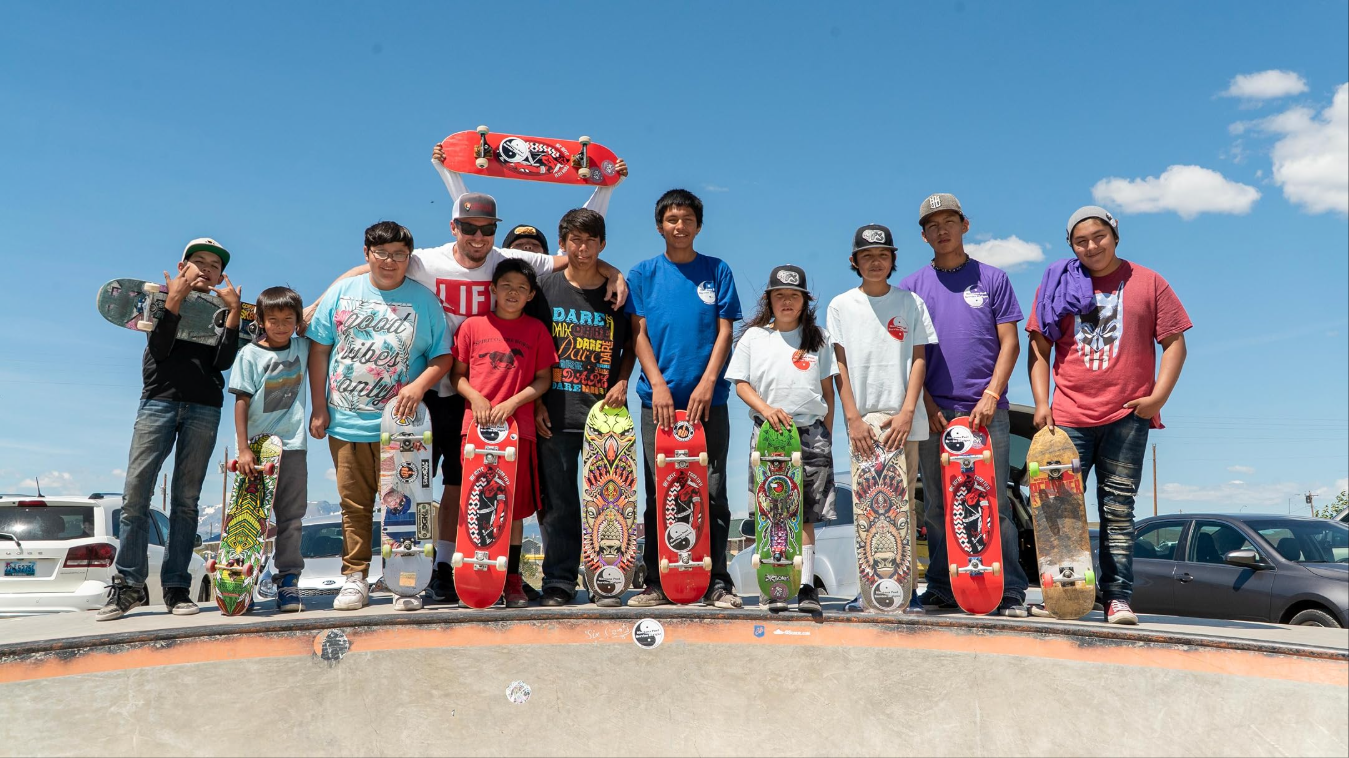
A labor of love filmed over 11 years, Montana Grind highlights the power of skateparks as communal spaces, particularly in rural, underserved towns in Montana. The documentary focuses primarily on how skateboarding positively changes the lives of Native youth and also dispels negative stereotypes often attached to skate culture. More than 35 parks are featured, many created through the combined efforts of the Montana Skatepark Association and Montana Pool Service, a non-profit organization founded by Pearl Jam’s Jeff Ament.
Director Dos Reis introduces us to numerous community members, including young skaters we watch transform on screen. By following many of the subjects over the years, he documents their journey from childhood to adulthood (and even fatherhood) and how skating fosters friendships, creativity, and saves lives. Along the way, Dos Reis also interviews activists, local leaders, and skate legends such as Tom “Wally” Inouye, Doug Saladino, Randy Katen, among others, and also Ament himself.
The documentary’s soundtrack features an original score by Ament, as well as select works from his solo catalogue. In the documentary, Ament discusses his lifelong passion for skating and how it developed his confidence, which ultimately translated to his career as a performer. He states that through Montana Pool Service, he can give back to the community that shaped him. Ament grew up in Big Sandy, population 605, according to the 2020 consensus.
“The music is now sort of paying back where it all sort of started, and it started with skateboarding…”
Although the documentary provides an uplifting look at Montana’s skate culture, it also provides context for why the skateparks are essential by educating viewers on Montana’s Native communities and the history of the land. A destination for nature-lovers and adventurers, Montana is known widely for its picturesque national parks, namely Yellowstone and Glacier. However, Montana Grind bypasses the state’s postcard image and provides an unvarnished look at the residents that make up Montana’s backbone.
Montana is primarily comprised of a web of small towns and seven reservations, many impacted by poverty, addiction, and rural isolation.
Over time, the skateparks have become something greater.
Montana Grind spends time in Browning, home of the Blackfeet Nation, St. Ignatius, and Livingston, towns where skateparks were built. In each location, the benefits of the parks are evident, offering spaces for kids and the greater community to congregate. In Browning, the Blackfeet tribe delivers daily free meals to the skatepark in the summer. In St. Ignatius, the skatepark is strategically placed near a church. Overtime, the young skaters have developed support systems, a greater sense of self, and more optimistic views of their futures.
Following the credits, Montana Grind highlights how the state has become a growing destination for skateboarders from all over the country, and the growth of its skateparks shows no signs of slowing down. After the construction of the state’s first skatepark in Missoula in 2006, 20 years later, Montana now boasts over 50 parks. According to Ament, “We have more world class concrete per capita in Montana than anywhere.”
The documentary concludes with “To be continued…”
Well, the grind never stops.
Montana Grind debuted in February at the Big Sky Documentary Film Festival and has since screened throughout Montana.
The documentary made its final screening stop on July 3rd, 2026, at Easy Street Records in Seattle. It is also available to rent for a limited time through Pearl Jam’s 10 Club.
Additionally, Montana Grind’s soundtrack is available on all major music streaming services.