The Big Dark Records Is Entering a Brighter Season
When the tide rises, all boats rise.
This is the ethos of The Big Dark Records, a burgeoning West Seattle record label founded by Kellen and Magen Holgate.
What began as a way to support their daughters has become a full-time operation with a distinct brand presence. With an emphasis on artist development and community building in the local music scene, the label's intimate approach seeks to uplift up-and-coming talents and the community around them. One thing that makes the label stand out is Soundcheck Seattle, a monthly playlist spearheaded by Magen. The playlist features new releases from emerging Seattle-based artists. Since its inception, the playlist has gained solid social media traction and now receives hundreds of submissions. The couple believes deeply in supporting the local music scene as a whole, since those artists are building a thriving scene alongside the artists on their own label. The playlist is also a great way to discover great music.
Kellen and Magen also emphasize attending local shows, buying the artists' merch and physical media, and supporting all-ages venues.
Even after its repeal in 2002, the Teen Dance Ordinance's negative impact remains decades later. All-ages venues are scarce (with institutions such as Vera Project and Real Art Tacoma being among the few), and booking underage artists is often a challenge, which directly affects audience growth and opportunities for collaboration. How can our artists grow if there is barely anywhere for them to play?
"We've been part of scenes that are heavily all-ages based, and the amount of acts that explode out of them just seems to be higher because what kids like is what the world likes generally. If you're restricting kids out of a scene with the lack of all-ages venues, it's really hard to get a beat on what's actually exciting and what is gonna break out of the scene." - Kellen Holgate
Kellen's statement rings true: all-ages venues of yore provided fertile ground for the Seattle music scene's massive cultural impact. One of those venues was the Metropolis, the subject of an upcoming documentary from Jonathan Evison. The venue was a punk refuge, hosting shows by local acts such as Bam Bam, The Fastbacks, The U-Men, and Malfunkshun, and drawing in concertgoers and performers who would later become part of bands such as Pearl Jam, Soundgarden, Mudhoney, Guns N' Roses, and more. The venue closed in 1984 due to pressure from the surrounding neighborhood.
Despite some local progress, many challenges remain in platforming young artists. However, The Big Dark Records reminds audiences that your new favorite band may just be in your backyard, if you take a chance to look. While many record labels look for artists with considerable momentum, The Big Dark is the launching pad for artists ready to take the leap.
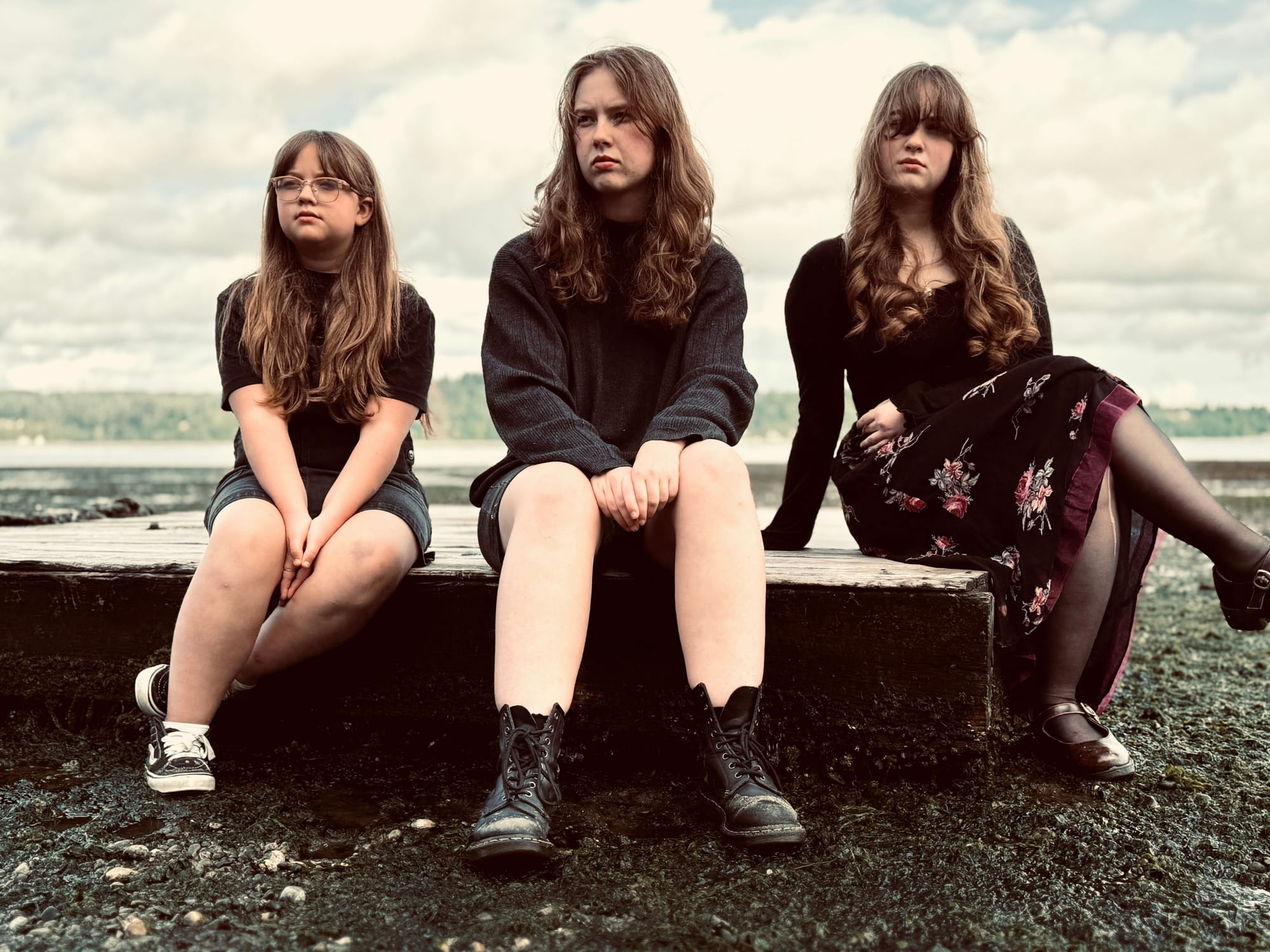
The label's roster currently includes Sad Dad Autumn, a multi-instrumentalist sister trio (Leah, Lily, and Lilah Holgate) whose work is hailed as dark alternative folk. Last year, the band released their debut LP, The Great Dying. The album is described as a cinematic indie folk odyssey that follows a young girl as she descends through the mythical realms of grief, loss, and the afterlife.
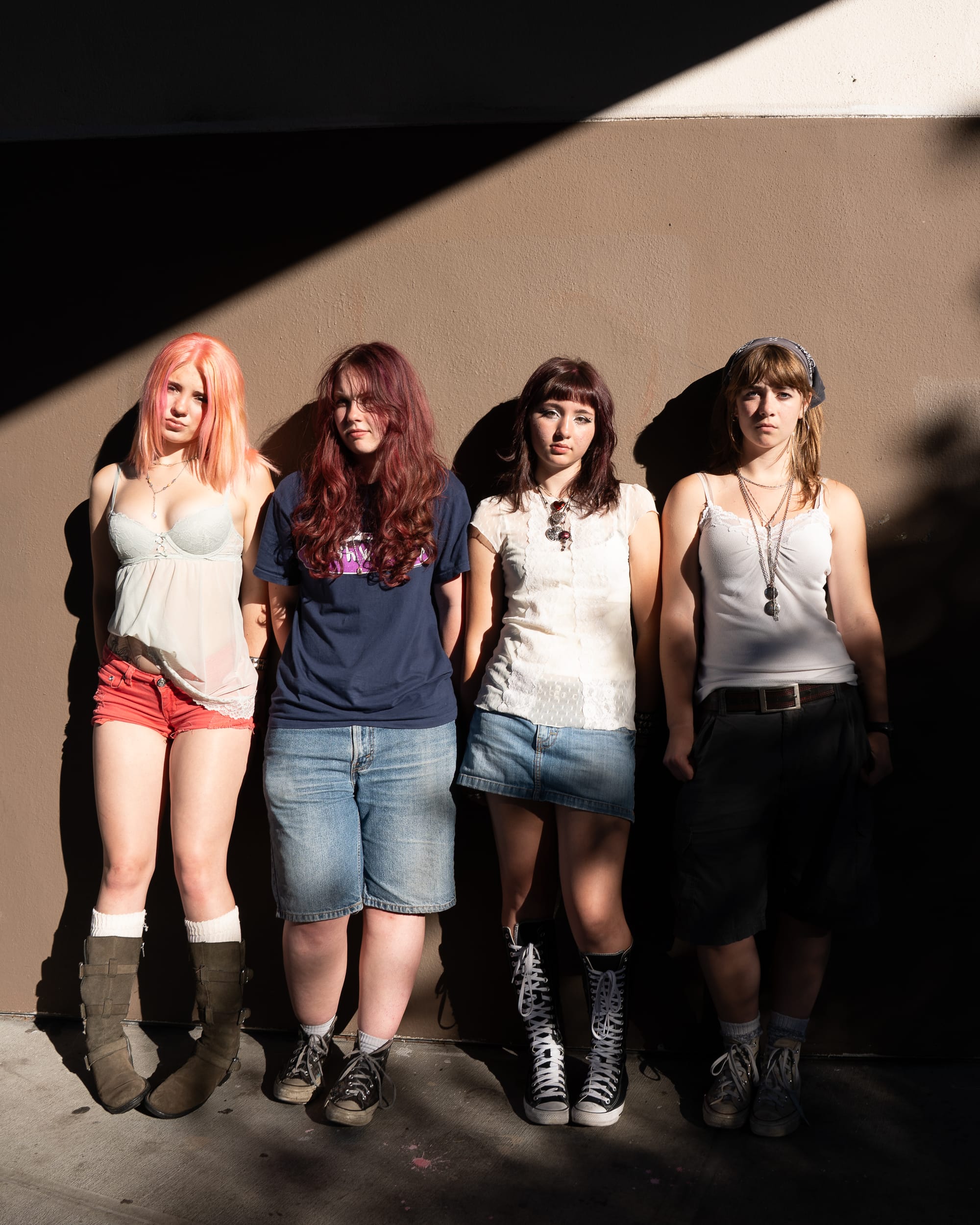
The second band signed to The Big Dark is Chewing Gum (Maddie Mehary, Olivia St. Germain, Lily Holgate, Maya Woods), an all-girl heavy grunge band that pays homage to bands such as Alice in Chains and aims to bring back female ferocity to an often male-dominated genre. In September, the band released their self-titled EP.
The label has also recently expanded its roster, teasing some brand-new local talent to support. The label will announce the new signees at The Big Dark Festival on December 20th, at the Skylark in West Seattle.
Ahead of the announcement, I spoke with Kellen and Magen about the label's growth and new direction.
This interview has been edited for clarity.
Adriana Gomez-Weston: I'm so excited about what you guys are doing with The Big Dark Records. My first question for you is: What inspired you to start a record label?
Magen Holgate: I feel like as time goes on, this keeps getting muddied more. I think we have individual answers for this. At the time, I personally was trying to decide... I wanted to do something in music, and I also just wanted to do something outside of my everyday career. Also, we had different music businesses in the past. And then, it all culminated when our daughters, who are musicians, came to us with a demo. We didn't even know they were writing.
We're both musicians, and they grew up going on some tours and were in recording situations. So, it's kind of in our family ethos, but we didn't know they were writing. Then they came to us with this demo, and we were like, "This is so cute!" They sat us down formally to listen through, and we were like, "Holy crap."
We did not expect it to be so good, and then our brains were like, okay, we need to do something about this and help. And then, with all their musician friends and the kids around us and the music around us, we were like, "You know what? We have all the skills to do a label."
It coincided with what I wanted to do at the time and what Kellen wanted to do at the time. And so here we are, where we just keep adding more and more.
Kellen Holgate: It went from listening to our kids' demo to having a whiteboard on the wall, figuring out names for a label, very, very fast. It was a this escalated quickly kind of moment. But yeah, that's where it started, and where we are now is very different. We're a real record label with a release calendar and a bunch of new artists that we've signed, and we're having a lot of fun and a lot of stress.
AGW: With the artists on your label, are you searching specifically for younger, up-and-coming acts, or are you expanding your horizons? What are you looking for when you look for new artists?
KH: Funnily enough, we were just talking about this. There's a thing that we can bring, which is more than just writing checks, which is what a lot of labels do. They'll hire the team for the artist, they'll help promote a record, and they'll fund a release.
We can do that, but that's not our sweet spot. Our sweet spot is the development aspect of it. I think it's always gonna be for us, developing artists that are taking the first couple steps in their career versus someone established that just needs a checkbook. That's not where we're gonna have fun, and we wouldn't be doing this if we weren't having fun because it just costs money. It's hard to make money as a record label, and it's a passion project for both of us.
MH: And a passion project not just to make the music and to work with the artist, but also to help them make money. It's hard for a startup business to make money very quickly; maybe that is in the plan. But for the artists, we want to make sure that since they're young, they're not making bad decisions, and that we can guide them in a way where they aren't being taken advantage of. That's the goal: to help them not only make money but to reach their goals. While it does take a lot of investment on our part, it's also extremely rewarding.
KH: All of the incentives are toward trying to create sustainable music careers for young people who are just starting out in their career.
MH: How we pick people, to your original question, is the A&R part of finding music that we want to make and that we believe in, and we want to support those artists in particular. There's so much good music in Seattle and the Pacific Northwest right now, like a ton. I can just go on.
I made a list recently for someone, and it was crazy long, with emerging artists with new releases; it's crazy. But we're two people who have particular taste and particular expertise in certain genres. We get to pick who we want to work with. On the side, what we can do is help the scene generally and be a resource for all the other bands that we can't make music with because we can only do so much.
KH: Something that sets our label apart is that we're a production team as much as a label ownership team. We want to be hands-on with the artists. There are certain artists that are past the development stage where they don't need that. That's not helpful to them. Whereas a young artist who has never been in the studio before, never talked to a producer in their life, will be able to have a team that helps them bring the product into the world. That's something we can offer that's really valuable to a particular kind of artist.
MH: I think that for us that's exciting, and I also think that should be exciting for the community, right? We're finding these talented young emerging artists that have music to share, and there's gonna be a team that can get behind them and start early in developing that sound that will come out of our region.
KH: There's a certain type of artist that we're just not useful at all, like a bedroom producer where they just do it all on their own. Our skills and our network and our ability to do bigger productions doesn't help them. So, we're focused on people that need that kind of wraparound help. We can help people source musicians and studio space. We have a lot of full bands that have drum kits and wanna sound kind of rocky or more garage. That's really hard to do in your bedroom and have it sound good.
So, that all kind of goes into who we're choosing to work with. It's the actual things we bring to the table besides just the checkbook that are helpful to those artists.
AGW: Since you work with younger artists, most in their teens, what challenges have you faced finding all-age venues for them to play that are safe and supportive?
MH: Working with younger artists comes with a whole different set of issues... down to having to make sure that you work with families a lot, and protecting them from stuff has been a big deal, unfortunately, in guiding them.
When it comes to all-ages and the scene, the one gap I'm seeing is the venue situation. A good example is Chewing Gum. I got three or four offers today for shows for them. They're just constantly being asked to do shows in Portland, all over, but the first thing I have to ask is, is this an all-ages venue?
Why that's an issue is because so many people want to play with them, and they want to play with those people too. They want to be exposed to different audiences and have that experience, but it's almost impossible. It's very hard. There are only so many all-ages venues.
Then people say, "Well, technically they can just wait in the green room until they play." Who wants to do that? Who wants to not see the audience and hang out with people? I'm just seeing this major divide where certain generations can't be exposed to other generations, and that's crazy. That's just not a healthy scene.
So yeah, that would be one of my biggest gripes about working in the scene with younger artists. It's difficult.
KH: I think at all-ages shows there's a different energy too. We've been part of scenes that are heavily all-ages based, and the amount of acts that explode out of them just seems to be higher because what kids like is what the world likes generally. If you're restricting kids out of a scene with the lack of all-ages venues, it's really hard to get a beat on what's actually exciting and what is gonna break out of the scene.
MH: And that's how people discover music. Now that I think about it, another really tough thing is that we're making great music. We have a good album; we have a good EP out already, but it's really hard to place them. We've gotten some radio play, but certain places, if they're not on their radar, haven't seen them live, they're not gonna place them. And that's too bad because there's a lot of good music, but people don't even know that it exists because they're not playing those shows. It's just like a certain age group seems to get more actual play in the industry around here, when there is a good chunk of good music that is made by people that can't go to those venues.
KH: I think there's some weird bias against young bands. People don't take them seriously until they're able to play a bar or something, which is kind of odd. Because in the broader music industry, young people are what drive the industry. Maybe it's a Seattle thing, or maybe it's everywhere.
There's a challenge working with young bands, as Magen said too; just doing legal contracts with people who are under the age of 18 is difficult. You have to get a parent to sign off. They can walk away at any time. It's very nice when they're over the age of 18. They can sign their own contracts; their parents don't have to be in the room. But once we get by, it's very fun to work with young, excited people that aren't jaded. It's a joy.
AG: How are you feeling about Seattle as a whole? I feel like West Seattle is its own enclave. How do you feel about how you've been supported by West Seattle as opposed to the Seattle scene as a whole?
MH: We were just talking with Skylark. It's like our only real venue. If you're doing a release, you can do it at Easy Street, but there's just not much of a scene here. We're trying to help that, but without a venue, I mean, what can we do? We're trying hard to give support to the local bands and give exposure, especially when our artists are from West Seattle and doing fairly well in different areas. Sad Dad Autumn's always great at getting plays. If we want to pitch their music, it usually goes really well, and then Chewing Gum's just doing well in all other areas.
I don't know what to say about West Seattle. We love West Seattle, obviously. This is where we live and work. We're doing our best to support the scene here while also getting out into the broader scene and being seen.
KH: We don't do a lot of live events, but we have done a couple of booths at festivals. We've run a stage at the West Seattle Summerfest...
MH: When it was gonna disappear. That was when we heard that there was only gonna be one main stage, so that all the emerging artists weren't gonna be able to play, and we made a stage to make that happen.
KH: But West Seattle has supported the label's events in droves. We've had two release shows that were packed to the gills. We've had this stage that we developed that people came out to and participated.
I think the West Seattle community supports us. We just don't have a way to support an all-ages scene in West Seattle 'cause it doesn't really exist...
MH: Besides just making stuff up, creating pop-up stuff, which we try to do, but we don't want to be an event thrower.
AGW: How do you juggle more traditional jobs with running a record label?
MH: Totally a full-time job for both of us. If we weren't so intense about the label, we would not be able to go as hard as we've been going with what's going on. We work for ourselves. I work for myself, very part-time. So, I'm able to focus a lot. I'm kind of switching, so this is my career now.
KH: I at least temporarily retired from my career pretty recently. So this doesn't have to be my full-time job, but it ends up being my full-time job. So yeah, I was juggling both of them for a while until a few months ago. Magen took the lead for a couple of years as we started. So, I'm three months into this being the main thing that I wake up and do every day.
AGW: What are your hopes for the next couple of years for the label?
MH: I am really excited about our upcoming artists and the music we're about to make. There's Sad Dad Autumn's album, which is great, and Chewing Gum's EP.
I'm just excited to show what we can really do this year when it comes to music. We've been brand-building a lot and working to establish ourselves. I feel like we've done a lot of that. I'm just really excited to really get into it with some music and the projects that are upcoming.
KH: Yeah, I mean to put a little bit of meat on that bone. We're maturing a little bit in our production style. We just signed a band that we're really excited about. Magen kinda fell in love with their music before we reached out to them, and we just signed a deal with them. They're gonna be working with a producer that people know the name of in a studio that people know the name of, and we're gonna be really going hard on the production quality. We just signed a different band that needs a different set of skills, where we're gonna be very hands-on producing them.
MH: And we have a dark pop project.
KH: We're currently in the studio constantly on that one. So, we are beyond hands-on. A lot is coming out in 2027 to be excited about, and then who knows what we will cook up for 2028 and beyond? But, for now, it's hard to look past 2027.
MH: I mean, overall, arcane, what we're looking forward to, I think, is the music that we're hopefully gonna be producing and putting out and hopefully getting people excited about what's happening in the younger scene of the Pacific Northwest.
KH: I mean, I am a boy...
MH: So one of the bands that we signed, it's gonna be new for us because they're boys, and we've never worked with boys before. Also, they're not from West Seattle. They're not even from Seattle, so that's a fun thing.
KH: But still very Pacific Northwest.
MH: I'm just saying that it's like we're bringing in the region.
AGW: Do you see yourselves as more of a Pacific Northwest label? Do you want to expand?
MH: We definitely want it to be just regional, probably forever.
KH: That doesn't foreclose us from having sub-labels or other stuff where we get excited about different things, but bringing the wider public's attention to the Pacific Northwest and the cool music that happens here is our mission.
MH: Across genre. We just want people to see that there is a unique thing happening here. I really believe in that. The sounds that come from here are a little different and special. I just really would like love to stay in the Pacific Northwest, so whether that means we get into Portland or Vancouver, that kind of thing, I mean, that's fine. But keep it DARK!
AGW: What can you say about what people can do to support local music, especially younger artists?
MH: If people could just pick one to two local artists and listen to their music regularly, that would be incredible. I do believe that adults, especially, we want to know what's new, right? We have a lot of non-human curation going on. If you could find your local young artists and kind of just sample and then put them on repeat, buy a CD from them, buy stuff from them, it's always helpful. Rep them.
That's another thing that West Seattle supports us with: Everyone's wearing our merch and shirts, wearing the band shirts... But listen to the music. It's so important.
KH: The easy plug is that Magen does a playlist that she curates called Soundcheck Seattle, and it is the new music coming out from the most exciting bands in Seattle at any given time.
MH: They're emerging artists with recent releases.
KH: So people can listen through. There's something for everybody in there.
MH: Totally different genres, top to bottom. If you listen through that once a month, you might find something you absolutely adore.
KH: I've been thinking about this a lot. How can someone be a good fan of local music? And really, it's go to shows, listen to the music. If you like it, buy their merch. That actually helps the bands. The single best thing you can do for most bands is buy their T-shirts. That's where they actually make money for gas to get to the show. Come out to their shows. That keeps the venues alive, and just listen to their music and become a real fan.
When people say, "Who's a good band?" You don't have to say, "I like this local band and this mainstream band." People are fans of music, and your favorite band can be a local band.
MH: Or your second favorite band.
KH: Some of our favorite new music is local for sure. There's some amazing music, just all over the city. Not necessarily from younger bands, but just great bands. If people go to enough shows or listen to enough music, they're gonna find something that they love.
AGW: I've gone to a lot of shows, and I like your playlist. I love it because I've seen a lot of the artists too, but I think it is a great way for them to promote and collaborate and just get excited about other artists that maybe you wouldn't otherwise discover.
MH: Only so many people are listening to it a month, but I do hear a lot of people saying, "I discovered stuff on it," but my favorite part is once a month when all the artists get together and are resharing. Something that happened last month that I hope that people continue to do is that other artists that were on the playlist listen through and find a song and then post it to their social media, saying, "This song is so sick, I didn't know about it before!" and rep a different band. If everyone did that, that is just super cool. I love it.
AGW: Are you doing The Big Dark Festival again this year? Are there any other things that you have coming up?
MH: Yeah. One thing that's coming up is that if anyone's interested in alternative dark folk, Sad Dad Autumn's gonna release some B-sides, but they're gonna restart telling their concept album story in the next month or so. Then in December, December 20th at the Skylark, we're gonna have the Big Dark Fest. There'll be limited tickets, but we are gonna sell some tickets. We are gonna be announcing our new artists at the festival.
KH: There will likely be a live stream option as well so that people who can't get tickets can tune in.
MH: But not guaranteed.
KH: Certainly not. Nothing in life is guaranteed.
AGW: That sounds awesome! I look forward to seeing the new signees!
MH: We're gonna try to tease it a little bit, but I think that it gives us a little bit of time to get everyone ready and get everyone excited about what's coming in 2027. It takes a long time to record a record, so we gotta eke it out a little bit.

For more information about The Big Dark Records, visit thebigdarkrecords.com, or follow on Instagram @thebigdarkrecords.
Sad Dad Autumn is on Instagram @saddadautumn.
Chewing Gum is on Instagram @chewing_gum_time